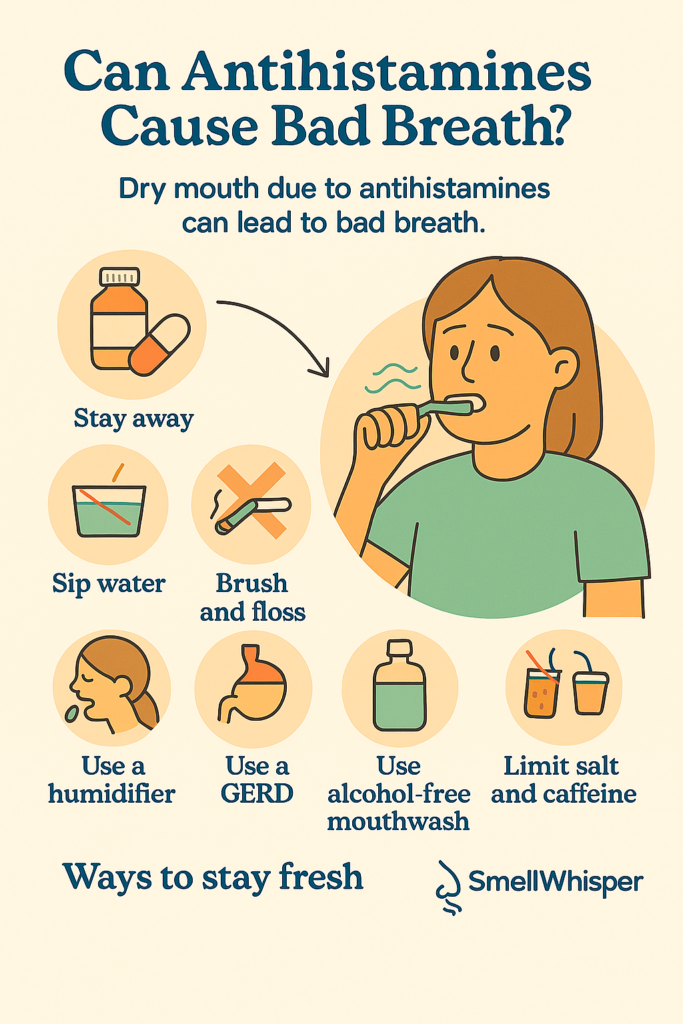
🌬️ Can Antihistamines Cause Bad Breath?
A SmellWhisper Guide to Dry Mouth and Halitosis
Antihistamines help millions of people manage allergies — but they can also cause a surprising side effect: bad breath. If you’ve noticed a dry mouth or funky breath after taking allergy meds, you’re not imagining it.
Let’s break down why this happens and what you can do about it.
🧪 What Are Antihistamines?
Antihistamines are medications that block histamine, a chemical your body releases during allergic reactions. They help with:
- Sneezing
- Itchy eyes
- Runny nose
- Hives
But they also affect other systems — including your salivary glands.
🧼 How Do Antihistamines Cause Bad Breath?
Antihistamines have anticholinergic effects, meaning they block a neurotransmitter called acetylcholine. This chemical helps regulate saliva flow.
Less acetylcholine → less saliva → dry mouth
And dry mouth is the perfect environment for odor-causing bacteria to grow.
🦠 Why Saliva Matters
Saliva isn’t just spit — it’s your mouth’s natural cleaning system. It:
- Washes away bacteria
- Neutralizes acids
- Clears out food particles
When saliva dries up, bacteria thrive — especially the kind that produce sulfur compounds, which smell like rotten eggs or garbage.
🚫 Other Medications That Can Cause Bad Breath
Antihistamines aren’t the only culprits. Other meds that reduce saliva include:
- Antidepressants
- Diuretics
- Decongestants
- Painkillers
- Acid reducers
- Steroids
- Chemotherapy drugs
- Antispasmodics
- Sedatives
🌱 What You Can Do About It
Here’s the SmellWhisper way to fight back:
✅ Stay Moist
- Sip water often — especially during meals
- Use a humidifier at night
- Try sugar-free gum or lozenges
- Use alcohol-free mouthwash
- Try artificial saliva products
✅ Avoid Drying Habits
- Don’t smoke
- Limit alcohol
- Avoid salty snacks and caffeine
✅ Keep It Clean
- Brush twice a day
- Floss daily
- Scrape your tongue
- Rinse after sugary or sticky foods
🩺 When to See a Doctor
Talk to your doctor if:
- Bad breath lasts more than a few weeks
- You have bleeding gums or tooth pain
- You notice fever or signs of infection
- Dentures feel loose or uncomfortable
They may adjust your medication or suggest alternatives.
🫧 SmellWhisper Reminder
Antihistamines help with allergies — but they can dry out your mouth and stir up bad breath.
With a few simple habits, you can stay fresh and comfortable.