
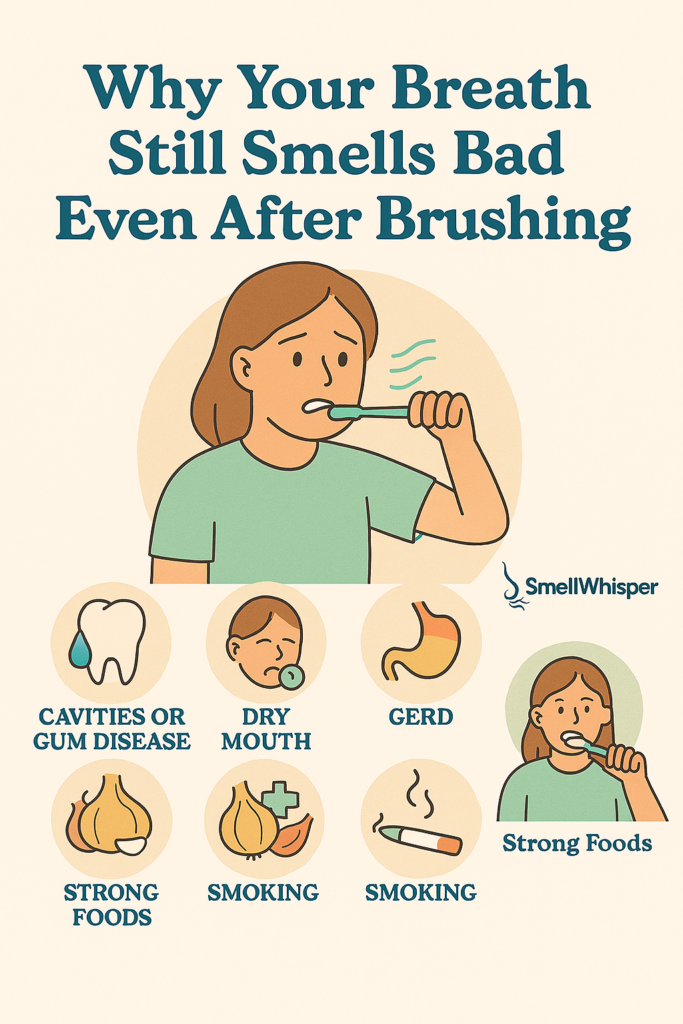
Most people deal with bad breath from time to time. But when your breath still smells off even after brushing, it can feel confusing — and honestly, a little frustrating. The truth is, brushing alone doesn’t always fix the root cause.
Here’s the SmellWhisper guide to understanding why this happens and what you can do about it.
🦷 Why Brushing Isn’t Always Enough
Brushing removes bacteria and food particles from the surfaces of your teeth. But bad breath often comes from places your toothbrush can’t reach — like deep gum pockets, the back of your tongue, or even issues outside your mouth.
According to Healthline, 80–85% of persistent bad breath starts in the mouth, but the rest comes from other parts of the body.
Let’s break it down.
🌬️ Common Causes of Bad Breath (Even After Brushing)
1. Cavities & Gum Disease
Bacteria love hiding in:
- Cavities
- Deep gum pockets
- Areas you can’t reach with a toothbrush
These bacteria produce sulfur compounds, which smell unpleasant and linger even after brushing.
2. Dry Mouth
Saliva is your mouth’s natural cleaning system.
When you don’t have enough saliva, odor‑causing bacteria multiply quickly.
Dry mouth can be caused by:
- Medications
- Alcohol
- Tobacco
- Dehydration
- Mouth breathing
3. GERD (Acid Reflux)
If stomach acid or undigested food flows upward, it can create a sour or unpleasant smell in your breath — brushing won’t fix that.
4. Sinus or Throat Issues
Postnasal drip can coat your throat and tongue with mucus, which bacteria feed on.
This can create a strong odor that brushing doesn’t touch.
5. Strong Foods
Garlic, onions, and certain spices release oils that enter your bloodstream and travel to your lungs.
This means the smell comes out when you breathe — not just from your mouth.
Brushing won’t remove it until your body fully processes the food.
6. Smoking
Smoking dries your mouth, irritates your gums, and leaves lingering chemicals that stick to your breath and tissues.
🌱 What You Can Do About It
1. Clean Your Tongue
Most odor‑causing bacteria live on the back of the tongue.
2. Floss Daily
Brushing cleans only 60% of your tooth surfaces.
3. Stay Hydrated
More saliva = fewer odors.
4. Use Alcohol‑Free Mouthwash
Alcohol can worsen dry mouth.
5. Treat Underlying Conditions
If GERD, sinus issues, or infections are involved, treating the root cause is key.
6. Visit Your Dentist
They can check for:
- Cavities
- Gum disease
- Tartar buildup
- Dry mouth issues
📚 References
- Healthline. What Causes Bad Breath Even After Brushing?
- Mayo Clinic. Bad Breath Causes
- Oral Health Foundation. Bad Breath Overview
- ADA. Causes of Halitosis